Thawing frozen green beans is a topic many home cooks wonder about. Whether you’re meal prepping or whipping up a quick weeknight dinner, frozen green beans offer a convenient, nutritious option to fresh produce. But when it comes down to cooking them, should you thaw them first or toss them straight into the pan? Understanding the best way to handle frozen veggies can save you both time and kitchen frustration.
Why Frozen Green Beans Are Popular
Frozen green beans have soared in popularity because they retain much of their nutritional value while being super convenient. Frozen at peak ripeness, these beans are available year-round without the risk of spoilage, making them a pantry staple for many. Plus, they’re a cost-effective alternative to fresh options, especially when fresh green beans are out of season or pricey. And if you love quick cooking, frozen green beans cut down meal prep time significantly.
Common Questions About Cooking Frozen Vegetables
Many people ask if thawing frozen green beans is necessary or if you can just cook them straight from the freezer. Others wonder if thawing affects the texture or flavor. If you’re exploring other cooking techniques like roasting or sautéing, the answer might surprise you. For tips on how to best cook these vegetables, check out avoid these common mistakes that lead to limp, droopy veggies and explore handy tips to get the most out of your frozen produce.
Should You Thaw Frozen Green Beans Before Cooking?
This question sits at the heart of thawing frozen green beans debates. The truth is, it depends on your cooking method and the texture you want to achieve. Let’s dive into expert advice and what sets frozen green beans apart from fresh ones.
Expert Opinions on Thawing
Many food experts suggest that thawing frozen green beans before cooking isn’t always necessary. In fact, cooking directly from frozen can yield excellent results and save valuable time. However, thawing comes into play when you want to avoid watery dishes or mushy textures. The USDA outlines three safe ways to thaw food, which include refrigerator thawing, cold water thawing, and microwave thawing — all great options if you decide to defrost.
Differences Between Cooking Frozen and Fresh Green Beans
Frozen green beans often have a different cooking time and moisture content compared to their fresh counterparts. Cooking frozen beans without thawing is trickier due to ice crystals that melt and release water, which can affect texture. Fresh green beans, on the other hand, cook faster and usually retain a crisper bite. Understanding this difference can help you choose the right cooking method for your dish.
Methods for Cooking Frozen Green Beans Without Thawing
One of the best parts about frozen green beans is their versatility. You can often cook them straight from the freezer and still get fantastic flavor and texture. Here are some great ways to do it:
Sautéing Frozen Green Beans
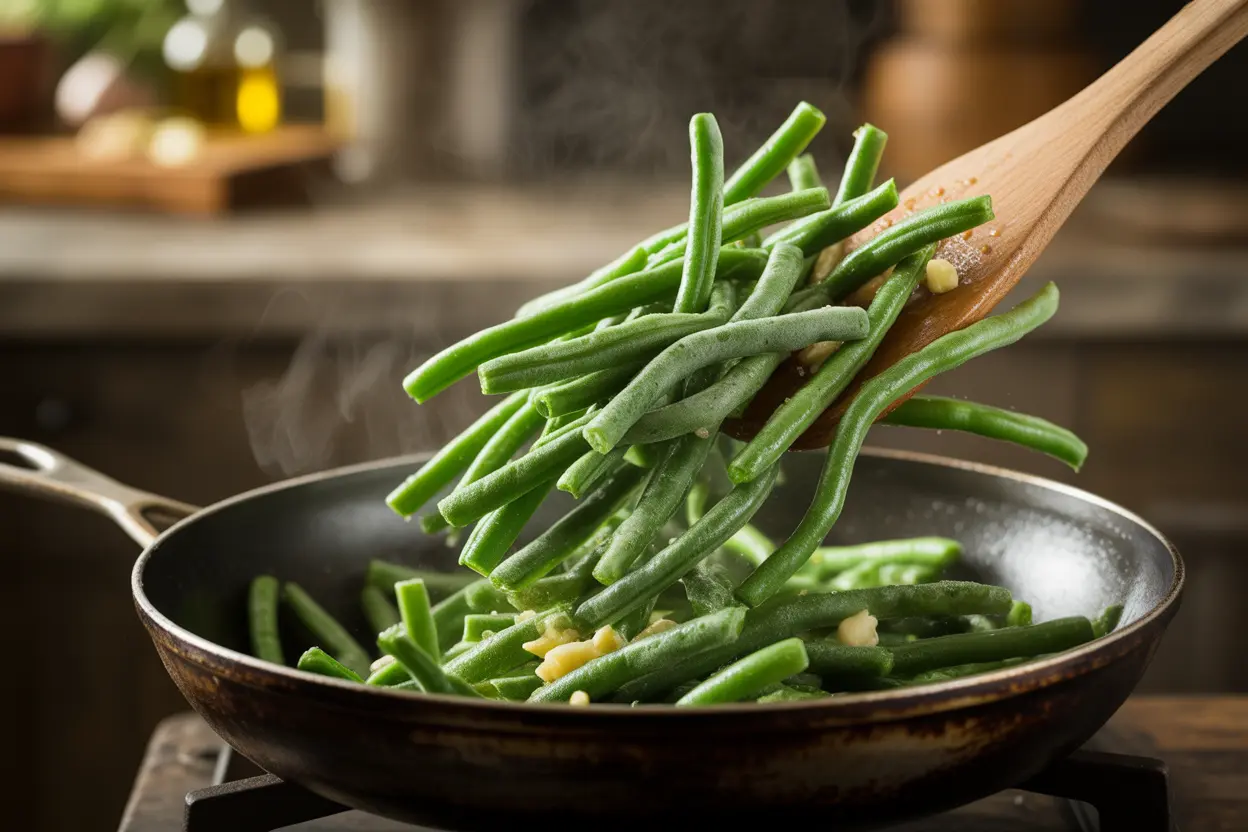
Sautéing is a quick way to bring out the natural flavors of green beans without thawing. Start by heating some oil or butter in a pan over medium-high heat. Add your frozen green beans and toss frequently. This method helps evaporate excess moisture and gives the beans a slight caramelization. For simple and tasty meal ideas that use sautéed frozen green beans, consider adding garlic, lemon zest, or chili flakes to elevate their flavor.
Steaming Frozen Green Beans
Steaming is gentle and preserves that bright green color and nutrients. Place frozen green beans in a steaming basket over boiling water, cover, and steam for about 5-7 minutes. This technique cooks them evenly without adding fat or breaking down texture, making them perfect for quick side dishes that keep their snap.
Roasting Frozen Green Beans
Roasting frozen green beans produces a wonderful crispy exterior and concentrated flavor. Spread them out on a baking sheet, drizzle with olive oil, salt, and pepper, and roast in a preheated oven at 425°F (220°C) for 20-25 minutes. Check out this roasting frozen vegetables tutorial to get them crispy and perfect every time. It’s an easy weeknight side dish that pairs well with almost anything!
Boiling and Simmering Techniques
Boiling frozen green beans is straightforward but requires some attention to prevent sogginess. By bringing a large pot of salted water to a boil and adding the frozen beans without thawing, you maintain efficiency. Simmer for a few minutes just until tender-crisp to avoid overcooking. These techniques work well for hearty plant-based dishes and soups.
When and Why You Might Want to Thaw Frozen Green Beans
While cooking frozen green beans without thawing is efficient, there are times when thawing really helps.
Avoiding Watery or Mushy Texture
Thawing brown frozen green beans before cooking allows excess water to drain, preventing a mushy outcome. When frozen beans thaw, they release ice crystals that turn into water. If cooked frozen, this extra moisture can dilute flavors and affect the final bite. By thawing and patting dry, you ensure a better texture, especially for roasting or sautéing. Learn more about preventing a mushy outcome and why it matters for your meals.
Enhancing Flavor and Seasoning Absorption
When thawed, green beans can better elevate their natural taste by soaking up seasonings and marinades. A dry bean surface means spices and herbs cling more effectively, infusing your dish with deeper flavor notes. This works wonderfully if you’re making dressings, adding garlic butter, or crafting special green bean recipes.
Thawing Methods and Best Practices
If you decide to thaw, use safe methods like leaving the beans in the fridge overnight or using the defrost function in your microwave for quick results. Avoid leaving beans out at room temperature to defrost, as that increases the risk of spoilage. For more on how to thaw safely, see The Big Thaw.
Tips for Best Results When Cooking Frozen Green Beans
Cooking frozen green beans to their best requires a bit of know-how. Here are some friendly tips to get the most vibrant, delicious results.
Using Proper Cooking Equipment
Non-stick pans or cast-iron skillets work great for sautéing as they manage moisture well and help achieve browning. For steaming, use a tightly fitted lid and a proper steaming basket for optimal heat circulation. Oven roasting needs a sturdy rimmed sheet pan to roast evenly without overcrowding, which prevents steaming and sogginess.
Seasoning Strategies
Don’t be shy with your seasonings! Salt enhances the bean’s natural sweetness, while garlic, pepper, lemon juice, and herbs can add layers of complexity. Try tossing your beans in olive oil or butter first, then sprinkling seasoning during or after cooking. For a flavor boost, check out how you can season frozen green beans to perfection and transform them into a taste sensation.
Avoiding Common Mistakes
One of the biggest pitfalls is overcrowding your pan or baking sheet, which traps steam and makes your beans limp. Another is overcooking – frozen beans cook quickly, so keep an eye to avoid mushiness. Always remember to cook them directly from their frozen state if you want to save time, but thaw when necessary to avoid watery dishes.
Nutritional Considerations of Frozen versus Fresh Green Beans
Wondering if frozen green beans stack up nutritionally against fresh ones? The answer is pretty encouraging!
Nutrient Retention in Frozen Green Beans
Frozen green beans are usually flash-frozen within hours of harvest, which helps preserve nutrient value, especially vitamins like C and A. According to experts evaluating the nutritional content of fresh and frozen produce, freezing can actually lock in nutrients better than produce that spends days in transit and on shelves.
Health Benefits Comparison
Both fresh and frozen green beans offer fiber, antioxidants, and essential minerals. Frozen green beans provide a cost-effective alternative to fresh options without sacrificing much in health benefits. Whether you steam frozen green beans or roast them, you’re still getting a nutritious veggie able to fit into any healthy diet.
FAQs
Can you cook frozen green beans directly without thawing?
Yes, you can absolutely cook frozen green beans directly without thawing. Methods like sautéing, steaming, roasting, and boiling all work well even if you start from frozen. Cooking straight from frozen helps retain firmness and reduces prep time, though some extra moisture may be released. For best results, adjust cooking times slightly to ensure beans are tender but not mushy.
Does thawing frozen green beans affect their texture?
Thawing frozen green beans can affect their texture by releasing excess water, which may lead to a softer or mushier outcome if not cooked properly. When beans thaw, ice crystals melt and increase moisture levels. Patting dry after thawing helps maintain a better texture, especially if roasting or sautéing. However, skipping thawing often yields crispier results.
What is the best way to thaw frozen green beans if needed?
The safest and most effective ways to thaw frozen green beans are to keep them in the refrigerator overnight, use cold water thawing, or microwave defrosting following manufacturer guidelines. These methods prevent bacterial growth and prepare the beans for even cooking. Avoid thawing at room temperature to reduce food safety risks.
How do cooking methods differ between fresh and frozen green beans?
Fresh green beans usually cook faster and don’t release excess water, so they tend to crisp up easily when roasted or sautéed. Frozen green beans contain ice crystals that melt during cooking and add moisture, which might require tweaking cooking times or drying techniques. Despite this, both can be prepared with similar methods, but frozen beans often benefit from direct cooking without thawing.
Are frozen green beans as nutritious as fresh green beans?
Frozen green beans are nearly as nutritious as fresh ones, sometimes even more so due to flash-freezing preserving vitamins and minerals. Both provide important fiber, vitamins, and antioxidants. Choosing frozen green beans is a great way to ensure you have access to healthy vegetables year-round without compromising on nutrient intake.
Conclusion
In summary, thawing frozen green beans before cooking is not strictly necessary and largely depends on the cooking method and desired texture. Cooking directly from frozen is convenient and effective for most methods like sautéing, steaming, and roasting. However, thawing may be beneficial to avoid excess water or to enhance flavor absorption in certain recipes. By understanding these factors and choosing appropriate cooking techniques, you can enjoy tasty, nutritious green beans any time. Experimenting with thawing and seasoning will help you achieve the best results tailored to your preferences.
For even more ideas to make your green beans delicious go-to sides, check out these Frozen Green Bean Recipes: Easy & Delicious Ideas and start cooking with confidence!
1 thought on “Thawing Frozen Green Beans: When It’s Necessary & How to Do It”