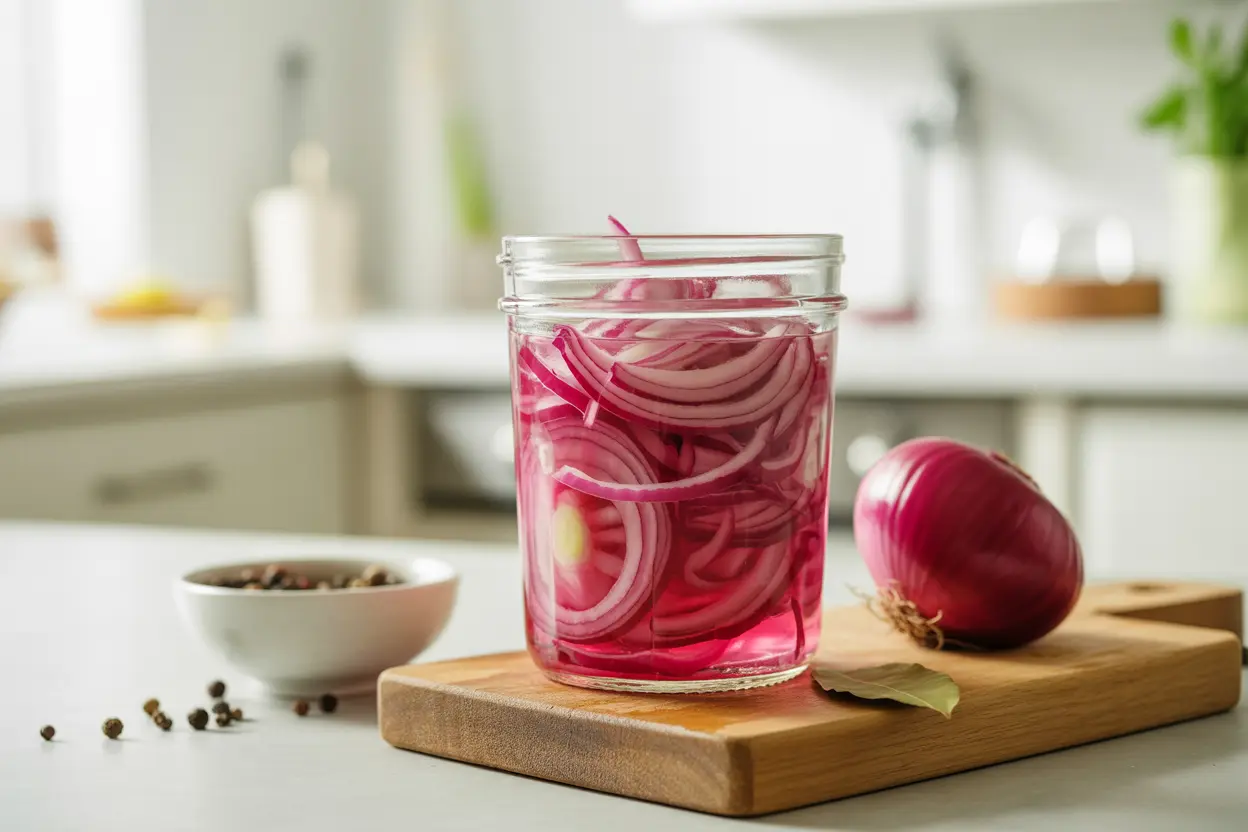
Introduction to Pickled Red Onions
What Are Pickled Red Onions?
Pickled red onions are thinly sliced red onions soaked in a tangy, often sweet, vinegar-based solution. They transform the sharp, sometimes overpowering bite of raw onions into tangy, zesty, and slightly sweet morsels that add a pop of color and flavor to any dish. They’re a staple in many cuisines, offering a delightful crunch and a subtle zing that’s hard to resist. Curious how to pickle red onions yourself? You’re in the right place!
Why Make Pickled Red Onions at Home?
Making pickled red onions at home means you control the ingredients and flavors—it’s fresher, often tastier, and can be customized to your liking. Unlike store-bought versions, homemade pickled onions avoid preservatives and excess sugars. Plus, the process is fun and surprisingly quick! You can find plenty of guidance, like understanding vinegar to use in pickling on sites such as Great Lakes Pickling. They’re incredibly versatile in everyday cooking, adding a tangy, vibrant burst to meals.
Essential Ingredients for Pickled Red Onions
Choosing the Right Red Onions
Start your pickling journey with the freshest red onions you can find. Look for firm onions with bright, deep purple skin and no soft spots or sprouting. Their natural sweetness and crisp texture are key—you want onions that hold their crunch even after pickling. If you’re curious about the impact of different onions, check out internal links on how different vinegars impact flavor and color to balance your recipe perfectly.
Vinegars Used in Pickling
The star of the pickling solution is the vinegar. Common options include apple cider vinegar, white vinegar, and sometimes balsamic for a sweeter twist. Each type brings its unique flavor notes and color effects to the final product. Understanding the nuances of vinegar selection is crucial for crafting the ideal taste profile; read more on different kinds of vinegar if you want to explore.
Sugar, Salt, and Optional Flavorings
Sugar and salt work in harmony to create the perfect pickling brine. While sugar balances the vinegar’s acidity, salt enhances the onion’s natural taste. For extra depth, try experimenting with herbs and spices such as garlic, bay leaves, or peppercorns to add layers of flavor. These optional enhancements can transform your pickled red onions from simple to spectacular.
Step-By-Step Guide: How to Make Pickled Red Onions
Preparing the Onions: Slicing and Cleaning
First things first—peel your red onions and slice them thinly, ideally with a sharp knife or mandoline for uniformity. Thin slices absorb the brine faster and evenly, ensuring that every bite bursts with flavor. Give them a quick rinse under cold water if you want to mellow raw sharpness, but this step is optional. After slicing, pat them dry to avoid diluting the brine. Easy, right? This foundational step sets you up for success!
Making the Brine: Combining Vinegar, Water, Sugar, and Salt
Next, prepare your pickling brine by mixing vinegar with water, sugar, and salt in a saucepan. Heat gently to dissolve the sugar and salt fully but avoid boiling vigorously—this helps keep flavors balanced. The classic ratio is roughly 1 cup vinegar to 1 cup water, 1-2 tablespoons sugar, and 1 tablespoon salt, but feel free to tweak this to your taste. For detailed recipes and techniques, check out Gordon Ramsay Pickled Onions: An Easy Step-by-Step Recipe for inspiration.
Pickling Process: Pouring the Brine and Storing
Place your sliced onions in a clean, airtight jar. Pour the hot brine over them, ensuring all onions are submerged. This part is crucial: submerge the onions fully to avoid spoilage and achieve an even pickling process. Seal the jar tightly and let it cool at room temperature before refrigerating. Store them in the fridge for crispness and freshness. You can track your pickled onions’ lifespan with a detailed guide on storage, ensuring you enjoy them at their best.
Quick Pickling vs. Traditional Pickling
Wondering about the difference? Quick pickling involves soaking onions in warm vinegar brine for anywhere from 30 minutes to a few hours, making it perfect for last-minute cravings. Traditional pickling requires longer fermentation times, often several days or weeks, creating a deeper, more complex flavor as described in Fermented Versus Quick Pickles. Your choice depends on how much time and flavor depth you want!
How Long to Let Onions Pickle for Best Flavor
If you’re quick pickling, onions usually absorb flavor beautifully after about 30 minutes, making them an irresistible topping right away. For richer taste, let them sit 24 hours or longer in the fridge. Traditional pickles develop their charm over several days or weeks. Keep in mind that longer pickling mellows sharpness while enhancing sweetness.
Variations and Flavor Enhancements
Adding Spices and Herbs (e.g., Garlic, Peppercorns, Bay Leaves)
Jazz up your pickled red onions by tossing in aromatic herbs and spices. Garlic cloves add depth, peppercorns bring a gentle kick, and bay leaves offer earthy undertones. Imagine your onions dancing with vibrant flavors—this method gives you a chance to channel a celebrity chef’s approach to elevating pickled onions into gourmet delights. Experimenting is half the fun!
Using Different Types of Vinegar and Sweeteners
Switching up your vinegar or sweetener can completely transform your onions. Try swapping white vinegar for apple cider or even rice vinegar for a milder taste. Instead of traditional sugar, consider honey, agave, or maple syrup for unique sweetness. These subtle tweaks tailor the flavor to your mood or the dish you’re enhancing.
Vegetarian and Vegan Pickling Tips
Great news—pickled red onions are naturally vegan and vegetarian! Just ensure any sweeteners you use align with your dietary preferences. Also, avoid animal-based additives. This simple condiment is a fantastic plant-based way to add zing and texture to vegan meals, making it a staple for compassionate cooks everywhere.
How to Use Pickled Red Onions in Meals
As a Topping for Salads and Sandwiches
Pickled red onions add a burst of brightness and crunch that effortlessly elevates your salads and sandwiches. Whether scattered on a leafy green salad or layered on your favorite sub, they cut through richness and add balance. For elevating your favorite sandwich, explore pairing these tangy treats with the best bread for sandwiches to create a flavor-packed bite.
In Mexican and Mediterranean Dishes
These sweet pickled red onions are classic partners for Mexican delights like tacos and are just as at home topping Mediterranean dishes such as falafel or gyros. Their tangy snap contrasts with heavier ingredients perfectly. For a fresh idea, check out how they become a key addition to sandwiches, salads, tacos on Frugal Hausfrau.
Creative Uses: Garnishes, Salsas, and More
Think beyond basic toppings! Use pickled red onions to garnish dishes like grilled meats or veggie bowls, stir them into salsas for added tang, or even mix into dressings. They’re versatile little flavor bombs ready to brighten any meal. Also, pairing them with a seasoned steak can truly surprise your taste buds—read more about pairing them with a seasoned steak for pro tips.
Storage and Shelf Life of Pickled Red Onions
Proper Storage Containers and Conditions
To keep your pickled onions fresh and crunchy, store them in sterilized glass jars with airtight lids. Avoid metal containers that might react with vinegar. Keep jars refrigerated and always use clean utensils to prevent contamination. For a deep dive, you can explore a detailed guide on storage to master preservation.
How Long Do Pickled Red Onions Last?
Typically, pickled red onions stay fresh in the fridge for up to 2-3 weeks, sometimes longer if sealed properly. Their flavor and texture gradually change over time, usually becoming milder. If you notice off smells, cloudiness, or mold, it’s time to discard. For tips on extending shelf life safely, check the National Center for Home Food Preservation for current research-based recommendations that address food safety concerns.
Common Mistakes and Troubleshooting
Why Are My Pickled Onions Too Sour or Too Sweet?
Too sour? You might have added too much vinegar or let them pickle too long. Too sweet? Perhaps excess sugar or a shorter pickling time. Balancing sugar and vinegar is like tuning an instrument — a little adjustment can hit the perfect note.
Preventing Mushy or Soggy Onions
Avoid this by slicing onions evenly and not over-soaking them. Using a quick pickling method helps maintain crunch, plus always ensure your jars and brine are clean and chilled.
Avoiding Mold and Spoilage
Mold often means exposure to air or dirty utensils. Always submerge onions fully under brine and store jars tightly sealed in the fridge to keep your pickles safe.
FAQs
How long does it take to pickle red onions? Quick pickling can take as little as 30 minutes, perfect when you’re in a rush but still want that flavor kick. For a deeper taste, letting them sit in the fridge for 24 hours or even up to a week helps mellow the bite and develop sweetness. Traditional fermentation methods may take longer—from several days to weeks—depending on the recipe you follow.
Can you eat pickled red onions raw? While red onions are commonly eaten raw, pickled red onions undergo a transformation. Technically, yes—you’re eating them raw but with the bright addition of vinegar and other pickling spices. This pickling softens their sharpness and adds tang, making them friendlier for many palates.
What vinegar is best for pickling red onions? Apple cider vinegar is popular because it offers a mild acidity with a hint of sweetness, enhancing the red onion vinegar pickling flavor. White vinegar provides a sharper, cleaner tang and vibrant color preservation. Some opt for red wine or rice vinegar for subtle twists. For an in-depth breakdown, see our guide on the Best Vinegar for Pickled Red Onions: A Flavor & Color Guide.
How do I store pickled red onions to keep them fresh? Use clean, airtight glass jars kept in the refrigerator. Always use clean utensils when removing onions to avoid contamination. Keep them submerged in brine to protect from air exposure. Proper storage can extend freshness to weeks, so plan your batch size accordingly.
Can I make pickled red onions without sugar? Absolutely! Sugar mainly balances vinegar’s acidity, but you can skip it for a tangier, less sweet pickle. Some people substitute with honey or agave if they want natural sweeteners. Just remember, omitting sugar will change the flavor profile to a sharper, more vinegar-forward taste.
Conclusion
Making pickled red onions at home is an easy, rewarding way to transform everyday onions into a zesty, sweet, and colorful condiment. By choosing the freshest ingredients and following simple pickling directions, anyone can whip up delicious pickled onions in minutes or days depending on the method. Don’t be afraid to play with different vinegars, spices, and storage techniques to create your perfect jar. Properly stored, your pickled onions will maintain their crunch and vibrant color, adding a delightful zing to salads, sandwiches, tacos, and more. So why not add some love and lemons to your kitchen with this versatile, tangy treat?